



Expert Energizing Microfiber Cloths People Need
Your facility budget isn't just leaking through labor costs; it's often drained by the 40% replacement rate of low-grade Microfiber Cleaning Cloths that degrade after only 20 industrial wash cycles. You understand that maintaining rigorous hygiene standards in Canadian healthcare or hospitality settings is a non-negotiable priority that requires durable, high-performance tools. Relying on inferior materials doesn't just increase your procurement frequency, it also compromises your infection control protocols and guest satisfaction scores.
This guide provides a practical framework for selecting the right GSM for your specific needs, maintaining your inventory to ensure longevity, and scaling your bulk orders to maximize ROI. We'll examine how to standardize your cleaning protocols to eliminate cross-contamination risks, reduce chemical usage by up to 95%, and keep your facility running at peak efficiency through a more sustainable procurement model.
Key Takeaways
-
Understand the mechanical cleaning advantage of wedge-shaped synthetic fibers over traditional cotton to enhance facility hygiene standards.
-
Learn how to evaluate Microfiber Cleaning Cloths by GSM and polyamide blend to ensure you select the right durability for specific janitorial tasks.
-
Identify industry-specific applications, from superior bio-burden reduction in healthcare settings to achieving lint-free finishes on high-gloss hospitality surfaces.
-
Implement commercial laundry best practices to prevent fiber damage and significantly extend the lifecycle of your bulk inventory.
-
Discover how strategic procurement and proper maintenance protocols reduce long-term operational costs for your Canadian facility.
Table of Contents
-
What Are Microfiber Cleaning Cloths and Why Do They Outperform Cotton?
-
Evaluating Quality: GSM, Blend, and Denier for Commercial Use
-
Choosing the Right Microfiber Cleaning Cloths for Your Industry
What Are Microfiber Cleaning Cloths and Why Do They Outperform Cotton?
Microfiber is a synthetic textile engineered to be finer than one denier that can hold six times its weight in water while maintaining structural integrity. These high-performance tools typically consist of a polyester and polyamide blend, where the polyester provides the scrubbing power and the polyamide provides the absorbency. Understanding What Are Microfiber Cleaning Cloths is essential for facilities aiming to upgrade from traditional cotton textiles to professional-grade equipment.
To better understand this concept, watch this helpful video:
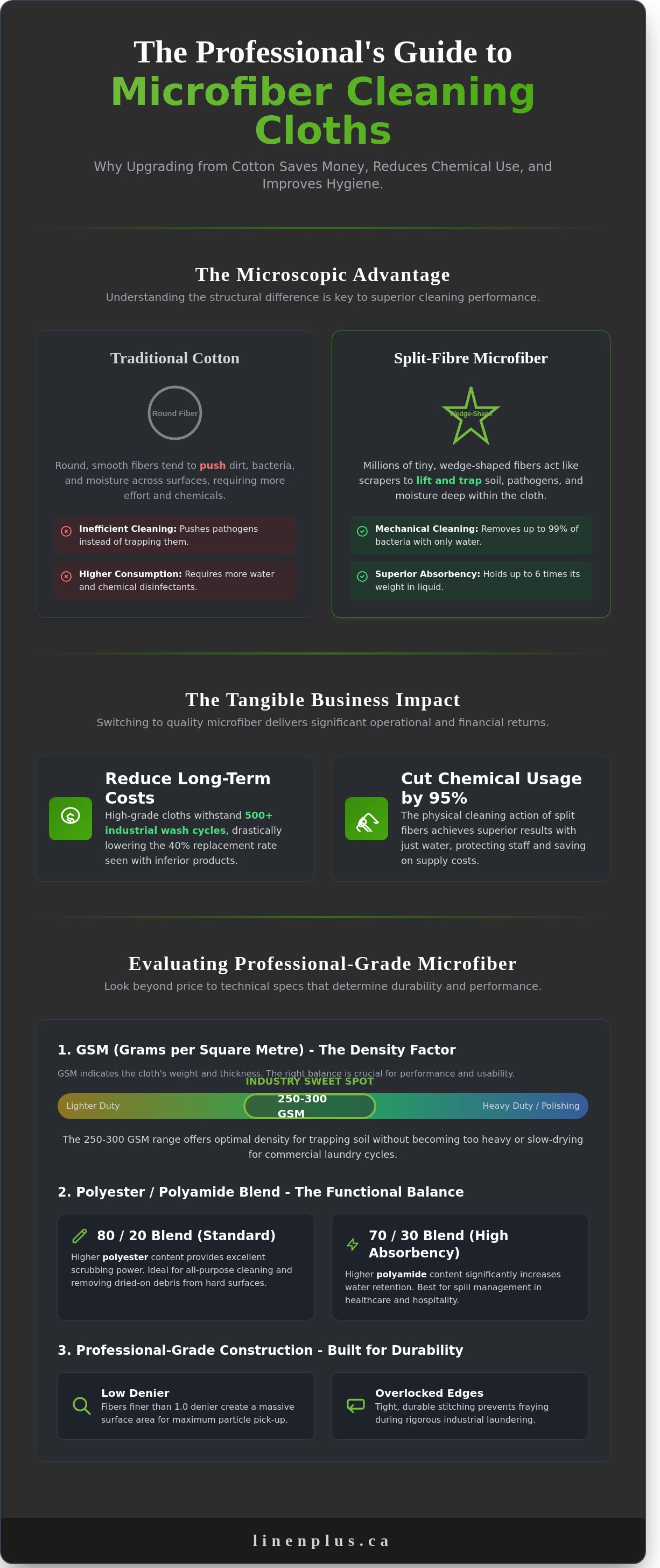
Microfiber Cleaning Cloths offer a distinct mechanical advantage over cotton because of their physical structure. While cotton fibers are round and smooth, microfiber is manufactured with wedge-shaped edges. These edges act like tiny scrapers that lift and trap pathogens and soil within the fiber itself. Cotton tends to push dirt and bacteria across a surface, often requiring more passes to achieve the same level of cleanliness.
The switch to microfiber also delivers a positive environmental impact by reducing the volume of harsh chemical disinfectants needed. Research from healthcare environments suggests that microfiber can remove up to 99% of bacteria using only water. For facilities sourcing medical supplies, this physical soil removal is a critical first step in infection control protocols, often leading to a 95% reduction in cleaning chemical costs over time.
The Microscopic Science of Synthetic Fibres
Commercial-grade microfiber utilizes split-fibre technology, a process where the fibers are chemically or mechanically split to create a massive surface area. This differs from domestic round-fibre textiles that lack the depth to store debris. The split structure creates millions of tiny hooks that grab dust and allergens that standard cloths leave behind.
This structure also facilitates intense capillary action. This physical phenomenon creates a vacuum effect within the cloth structure, pulling liquid and contaminants deep into the fabric. It's the reason professional cleaners achieve streak-free finishes on glass and stainless steel without excessive buffing. In high-traffic hospitality environments, this efficiency translates directly to faster room turnovers and improved guest satisfaction scores.
Evaluating Quality: GSM, Blend, and Denier for Commercial Use
Professional procurement requires looking beyond the price tag to technical specifications that impact long-term ROI. For general janitorial tasks, 250 to 300 GSM (Grams per Square Metre) represents the industry sweet spot. This weight provides enough density to trap soil without becoming too heavy for staff to wring out or taking too long to dry in commercial cycles. Selecting the right weight provides a performance plus for your facility team by reducing physical fatigue during long shifts.
Polyester vs. Polyamide: The Functional Balance
The ratio of polyester to polyamide determines how the cloth performs under pressure. Polyester acts as the structural scrubber, providing the mechanical action needed to lift dried-on debris from hard surfaces. Polyamide functions as the sponge, dictating water retention and drying speed. While an 80/20 blend is a standard versatile option, a 70/30 split offers superior absorbency for healthcare facilities and high-traffic hospitality environments where spill management is constant.
Identifying Professional-Grade Construction
Durability is measured by the denier of the fiber and the finishing of the edges. High-quality Microfiber Cleaning Cloths feature a denier of less than 1.0, creating a massive surface area for particle pick-up. To ensure a product survives 500 or more wash cycles, look for overlocked edges. This tight stitching prevents fraying during the rigorous agitation of industrial machines. You can perform a stretch test on-site; if the knit gaps significantly or loses shape, it likely lacks the density required for heavy-duty use. Proper maintenance is also vital, so following Commercial Laundering Best Practices will ensure the split fibers don't melt or clog with chemical residues.
Insight: The Softness Trap
Procurement officers often mistake plushness for quality. In industrial settings, a cloth that feels "too soft" often lacks the polyester "bite" needed for heavy grease removal. For mechanics or commercial kitchens, a tighter, lower-pile weave is more effective at shearing lipids from surfaces than a high-pile, fluffy alternative.
For facilities prioritizing hygiene and operational excellence, sourcing bulk medical supplies ensures consistency across all cleaning protocols and helps maintain strict compliance standards.
Choosing the Right Microfiber Cleaning Cloths for Your Industry
Selecting the correct Microfiber Cleaning Cloths depends on your facility's specific operational demands. A one-size-fits-all approach often leads to premature fabric wear or compromised hygiene standards. Professional buyers should evaluate fiber density and weave patterns to match their specific cleaning tasks and surface types.
In healthcare settings, the priority is bio-burden reduction. Ultra-fine fibers, often measured at less than 0.3 denier, are essential for trapping pathogens in patient rooms. Integrating these high-performance cloths with quality medical supplies creates a comprehensive hygiene protocol that meets stringent Canadian health regulations. This system effectively removes 99% of surface bacteria without relying solely on aggressive chemical disinfectants.
Industrial and janitorial applications require high-GSM (Grams per Square Meter) cloths. For heavy-duty grease, oil, and high-traffic floor maintenance, cloths in the 300 to 400 GSM range provide necessary durability. These thicker options withstand frequent industrial laundering cycles; this ensures a lower total cost of ownership for high-volume users.
Colour-Coding Systems for Cross-Contamination Prevention
Implementing a strict 4-colour standard is a proven method to eliminate cross-contamination risks. This visual framework allows staff to identify the correct tool for each zone instantly. The standard breakdown includes:
-
Red: High-risk areas such as toilets and urinals.
-
Yellow: Lower-risk washroom surfaces like sinks and mirrors.
-
Blue: General-purpose cleaning for offices and common areas.
-
Green: Specialized use in food-preparation and dining zones.
Training staff to associate specific colours with these zones reduces the risk of transferring bacteria between washrooms and kitchens to nearly zero. It's a simple yet highly effective way to maintain safety compliance.
Hospitality Standards for Guest Satisfaction
Hospitality environments require cleaning efficiency that directly impacts guest reviews and operational speed. Industry data suggests that 80% of guests prioritize room cleanliness over any other amenity. To achieve a 5-star finish, housekeeping teams use non-abrasive, lint-free hospitality environments tools on glassware and high-gloss surfaces.
Boutique guest rooms often feature delicate finishes like marble or polished chrome. Choosing a smooth-weave cloth prevents micro-scratching while removing fingerprints in a single pass. This reduces the time spent per room by approximately 15%, allowing for faster turnover during peak periods without sacrificing quality.
Ready to optimize your facility's cleaning performance? Shop our professional-grade cleaning cloths and supplies today.
Best Practices for Commercial Laundry and Bulk Procurement
Protecting your investment in Microfiber Cleaning Cloths requires a strict laundry protocol. The golden rule is simple: never use fabric softeners or bleach. Softeners coat the microscopic channels that trap dirt; bleach destroys the polyamide structure. For Canadian facilities requiring disinfection, maintain a wash temperature of exactly 60°C. This temperature kills most pathogens without melting the synthetic fibers. If you exceed 90°C, you risk permanent fiber damage. For more on managing high-volume laundry cycles, see our Incontinence Underpads guide.
Avoid high-heat settings in commercial dryers. Excessive heat makes synthetic fibers brittle, which leads to premature linting and reduced absorbency. Air drying is ideal. If you must use a dryer, select the lowest heat setting and remove the cloths while they're slightly damp. This prevents the static charge that attracts dust before the cloth even reaches the surface.
Maximizing ROI Through Proper Maintenance
Commercial buyers often mistake low unit price for value. A C$2.00 premium cloth designed for 500 launderings costs C$0.004 per use. Conversely, a C$0.50 retail-grade cloth that degrades after 25 washes costs C$0
Scale Your Cleaning Performance with Professional Grade Textiles
Choosing the right GSM and blend is a critical decision for your facility's hygiene standards and long term ROI. High quality Microfiber Cleaning Cloths provide a deeper clean while significantly reducing chemical waste. Since 2010, Linen Plus has served as a dependable B2B partner, offering the industry expertise needed to navigate complex commercial laundry requirements and procurement challenges.
We utilize direct manufacturer partnerships to secure competitive bulk pricing for our clients. With nationwide Canadian distribution, we ensure your supplies arrive when you need them. By prioritizing durable, high performance textiles, you simplify your operations and protect your facility's reputation. Our team is here to provide the consistent quality your business requires to thrive.
Shop Wholesale Microfiber Cleaning Cloths
Take the next step in optimizing your facility maintenance and experience the difference that professional grade textiles bring to your daily operations.
Frequently Asked Questions
Can I wash microfiber cleaning cloths with regular cotton towels?
No, you shouldn't wash microfiber cleaning cloths with cotton towels because it compromises the material's integrity. Cotton fibers shed lint that gets trapped in the microscopic hooks of the microfiber, rendering the cloth ineffective for precision cleaning. This cross-contamination ruins the fabric's ability to grab dust. To maintain performance, wash microfiber in dedicated loads using cool water and avoid fabric softeners that coat the synthetic fibers.
How many times can a professional-grade microfiber cloth be laundered?
A high-quality professional-grade cloth typically withstands 500 wash cycles before its performance begins to degrade. This longevity makes them a cost-effective solution for Canadian facility managers looking to reduce long-term procurement costs. Following specific laundering protocols, such as avoiding high heat above 60 degrees Celsius, ensures the synthetic fibers don't melt. Monitoring your inventory for edge fraying or reduced absorbency helps determine when it's time for a bulk replacement.
Do microfiber cloths actually kill bacteria and viruses?
Microfiber cleaning cloths don't kill pathogens, but they're scientifically proven to physically remove up to 99% of bacteria and viruses from non-porous surfaces. The split-fiber technology creates a massive surface area that traps microbes within the cloth rather than spreading them around. For healthcare environments in Canada, using these cloths alongside Health Canada-approved disinfectants provides a complete hygiene solution. This mechanical action is a critical component of modern infection control protocols.
What is the best GSM for general office cleaning?
The optimal range for general office maintenance is 200 to 300 GSM (grams per square meter). This weight provides the right balance of durability and flexibility for wiping desks, electronics, and common touchpoints. Lower weights lack the density for heavy soil, while cloths over 400 GSM are often too bulky for tight spaces. Choosing a 250 GSM cloth ensures your team can efficiently manage daily tasks without suffering from premature fabric fatigue.
Why is my microfiber cloth leaving streaks on glass surfaces?
Streaking usually occurs because the cloth is saturated with water or contaminated with fabric softener residue from a previous wash. Microfiber works best when it's damp, not dripping wet, as excess moisture leaves mineral deposits behind. If your cloths are clean but still streak, they've likely been laundered with dryer sheets that coated the fibers in wax. Switch to a dedicated glass-weave cloth and use a residue-free detergent to restore a clear finish.

Article by
Sohel Shahriar
Sohel Shahriar is the Chief Growth Officer (CGO) at Linen Plus Inc., Canada, bringing a strategic blend of growth marketing, brand leadership, and content expertise. Through his writing, he explores how quality linen, smart sourcing, and long‑term partnerships can create measurable impact for healthcare and hospitality organizations.