



Wholesale toiletries are far more than a simple line item on a procurement budget; they are a critical, tangible touchpoint in the guest and resident experience. For procurement managers in Canada's competitive hospitality and healthcare sectors, the challenge of balancing quality, cost, and sustainability has never been more acute. But what if the key to unlocking significant operational savings and enhancing client loyalty isn't found in the price-per-bottle, but in a complete strategic shift in how you manage personal care amenities? This guide provides the framework for mastering the complexities of bulk toiletry procurement, enabling you to enhance guest satisfaction and boost operational efficiency across your Canadian facility.
The Strategic Importance of Toiletries in Commercial Facilities
Commercial toiletries are not merely miniaturized retail products. They are specialized hygiene formulations—from shampoo and conditioner to soaps and lotions—designed for high-volume use in sectors like hospitality and healthcare. In today's review-driven economy, these personal care amenities directly influence guest satisfaction scores and resident comfort, often becoming a deciding factor in repeat business and positive word-of-mouth. This is where a specialized B2B partner like Linen Plus offers a distinct advantage over generic retail marketplaces, ensuring product consistency, reliable supply chains, and business continuity.
The core categories every facility must consider include:
-
Personal Cleansing: Shampoos, conditioners, body washes, and bar soaps.
-
Oral Care: Individually wrapped toothbrushes and toothpaste.
-
Specialized Hygiene Kits: Vanity kits, shaving kits, and sewing kits that add a layer of thoughtful convenience.
Toiletries for the Hospitality Sector
In hospitality, toiletries are an extension of your brand's identity. Elevating the guest experience often comes down to details like premium scent profiles and skin-friendly formulations that feel luxurious. The challenge lies in balancing this desire for a high-end feel with the fiscal realities of wholesale procurement. The essential list for any hotel or vacation rental ranges from standard shampoos and soaps to comprehensive vanity kits that anticipate guest needs.
Toiletries for Healthcare and Long-Term Care
The priorities shift dramatically in healthcare and long-term care settings. Here, the focus is on safety, sensitivity, and sanitation. Procurement must prioritize hypoallergenic, fragrance-free, and gentle options to protect sensitive patient skin. Furthermore, the anti-bacterial properties of hand soaps and body washes play a crucial role in infection control protocols, making the selection of these products a matter of clinical importance as well as resident comfort.
Key Categories of Bulk Toiletries for Canadian Businesses
Sourcing the right toiletries requires a clear understanding of the available product categories and their specific applications within a commercial setting. A well-stocked facility anticipates every need, providing a seamless experience for guests and residents.
-
Liquid Amenities: Bulk shampoo, conditioner, body wash, and lotion, available in large-format refill containers or individual bottles.
-
Bar Soaps: Formulations range from classic vegetable-based soaps to modern synthetic detergent bars.
-
Oral Care Essentials: Sourcing bulk, individually wrapped toothbrushes and travel-sized toothpaste.
-
Ancillary Items: Small but crucial items like shower caps, shaving kits, mending kits, and makeup remover wipes.
-
Specialized Kits: Pre-packaged amenity kits that streamline housekeeping turnover and ensure a consistent presentation.
Personal Care Liquids and Consumables
When selecting bulk liquids, it's essential to consider factors beyond scent. The viscosity of a shampoo or conditioner, for example, determines its compatibility with your chosen dispenser system. Concurrently, the industry is seeing a significant shift toward "clean beauty" ingredients, with a growing demand for paraben-free and sulfate-free liquids. Sourcing these higher-quality formulations at a wholesale price point is now a key competitive advantage.
Sustainable Packaging and Eco-Friendly Trends
Environmental responsibility is no longer a niche concern; it's a core expectation for Canadian businesses. This trend is powerfully reflected in toiletry sourcing:
-
Packaging: The rise of biodegradable plastics, post-consumer recycled materials, and FSC-certified paper wraps for bar soaps.
-
Materials: A transition to ancillary items made from sustainable materials like wheat straw or bamboo.
-
Corporate Alignment: Adopting eco-friendly toiletries directly supports corporate sustainability goals and appeals to an increasingly environmentally conscious clientele.
Individual Bottles vs. Bulk Dispenser Systems: A Comparison
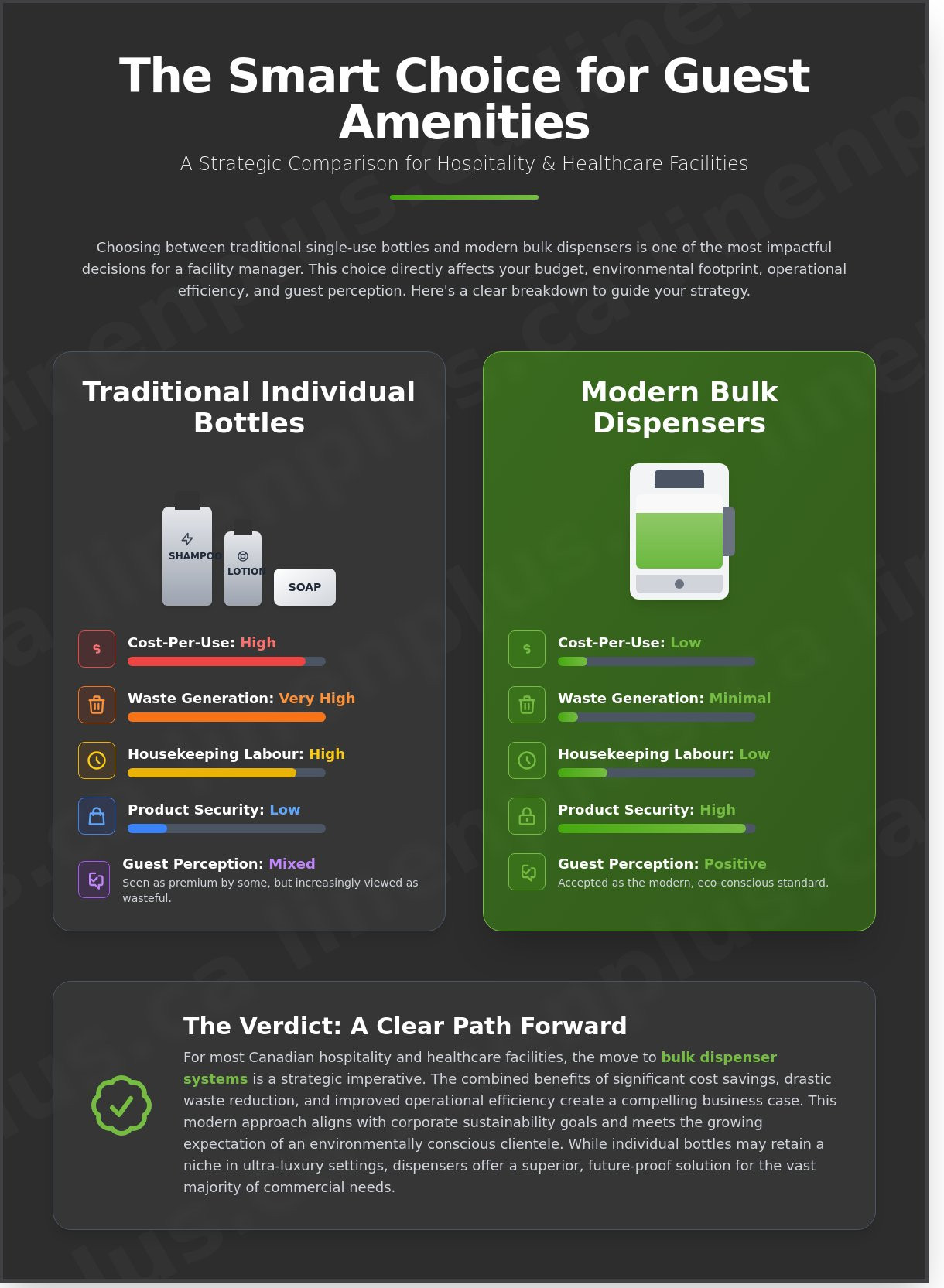
One of the most significant strategic decisions a facility manager will make is choosing between traditional single-use bottles and modern, wall-mounted bulk dispenser systems. While individual bottles offer a classic presentation, dispensers provide compelling advantages in cost, waste reduction, and operational efficiency.
| Feature | Individual Bottles (30ml) | Bulk Dispenser Systems |
|---|---|---|
| Cost-Per-Use | High; each unit is a discrete cost. | Low; purchase liquid in bulk, reducing per-use cost significantly. |
| Waste Generation | Very high; contributes significantly to plastic waste. | Minimal; drastically reduces single-use plastic consumption. |
| Guest Perception | Traditionally seen as premium, but now often viewed as wasteful. | Increasingly accepted as the modern, eco-conscious standard. |
| Housekeeping Labour | High; staff must replace multiple small items in every room. | Low; refilling is fast and required far less frequently. |
| Product Security | Low; bottles are easily taken or wasted. | High; tamper-proof designs prevent contamination and theft. |
The Case for Traditional Individual Amenities
Despite the clear benefits of dispensers, individual bottles still have their place. In ultra-luxury boutique hotels or for VIP suites, the presentation of a branded, single-use amenity can reinforce a message of exclusivity. For facilities that choose this route, partnering with a supplier who offers recognized retail brands can build guest trust and enhance perceived value.
Implementing Bulk Dispenser Solutions
When transitioning to bulk systems, the primary choice is between open systems (which can be refilled from any bulk container) and closed, sealed cartridge systems (which offer maximum hygiene). Success depends on establishing clear refilling protocols for housekeeping staff to ensure dispensers are always clean, full, and functioning perfectly. Exploring modern, high-capacity dispenser solutions from trusted brands can make this transition seamless and highly effective.
Sourcing and Inventory Management for Canadian Facilities
A successful toiletry program relies on a robust and intelligent supply chain. Canadian businesses must navigate unique logistical challenges, from vast distances to extreme weather, making the choice of a distribution partner critical. Calculating "Par Levels"—the minimum amount of inventory required to meet daily demand—is essential to avoid stockouts during peak seasons or supply chain disruptions.
Managing Toiletry Logistics in Canada
The Canadian climate presents a unique challenge: protecting heavy pallets of liquid amenities from freezing during cross-country transit in winter. An experienced supplier understands how to mitigate these risks through specialized shipping procedures. Furthermore, a strategically located distribution hub, such as our headquarters in Edmonton, provides a significant advantage for serving businesses across Western Canada, reducing lead times and shipping costs.
Procurement Strategies for Cost Control
True cost control extends beyond the per-unit price. By leveraging tiered pricing structures and volume discounts, facilities can significantly lower their overall spend. The most effective strategy, however, is consolidating your supply chain. Partnering with a "one-stop shop" that can provide everything from personal care items to janitorial supplies and premium bed and bath linens simplifies procurement, reduces administrative overhead, and unlocks greater volume discounts.
Why Linen Plus is Your Strategic Partner for Bulk Toiletries
Linen Plus transcends the role of a simple vendor to become a strategic partner in your facility's success. We leverage direct manufacturer relationships to ensure consistent quality and competitive Canadian pricing. Our expertise is tailored to the diverse needs of sectors ranging from 5-star hotels to long-term care facilities, all supported by a commitment to the Canadian market and efficient nationwide distribution.
A Complete Solution for Facility Management
Our value proposition is built on providing a complete solution. Beyond toiletries, we support your entire operation with a comprehensive inventory of linens, PPE, and janitorial supplies. Our team offers expert guidance on everything from selecting the right scent profiles for your brand to integrating your orders into a streamlined procurement process, all managed by a personalized account representative.
Getting Started with Your Toiletry Upgrade
Upgrading your facility's amenities is a straightforward process. We encourage clients to request samples to test for quality and fragrance, ensuring the products align perfectly with your standards. Once you are ready, setting up a wholesale account provides access to our streamlined online ordering system and preferred B2B pricing.
Partner with a Canadian hospitality supplier today for a customized quote and discover a better way to manage your facility's essential supplies.
Frequently Asked Questions (FAQ)
What are the most essential toiletries for a Canadian hotel in 2026? The essentials remain shampoo, conditioner, body wash, bar soap, and lotion. However, in 2026, there is a heightened expectation for these products to be eco-friendly, feature high-quality ingredients (e.g., paraben-free), and be presented in sustainable packaging or through bulk dispensers.
Is it more cost-effective to use bulk dispensers or individual bottles for guest amenities? For the vast majority of facilities, bulk dispensers are significantly more cost-effective. The initial investment in hardware is quickly offset by lower costs for bulk liquid refills, reduced housekeeping labour, and a dramatic decrease in product waste.
How can I ensure the toiletries I source are eco-friendly and sustainable? Look for suppliers that specify their use of post-consumer recycled (PCR) plastics, biodegradable materials, and FSC-certified paper. Ask about ingredient sourcing and whether formulations are free from harsh chemicals. Partnering with a transparent supplier is key.
What is the average shelf life for bulk wholesale shampoo and conditioner? Most liquid toiletries have a shelf life of 24-36 months when unopened and stored in a cool, dark place. Once opened, it is best practice to use the product within 12 months to ensure optimal quality and fragrance.
Can I customize the branding on my facility’s toiletries and amenity kits? Yes, many wholesale suppliers, including Linen Plus, offer custom branding options. This can range from adding your logo to individual bottle labels to creating fully customized amenity kits that reflect your brand's unique identity.
How do I handle the logistics of shipping large quantities of liquid toiletries in the winter? Partner with a Canadian-based supplier experienced in winter logistics. They will use temperature-controlled shipping methods or insulated packaging to prevent liquids from freezing and damaging the products and their containers during transit.
What ingredients should I avoid when sourcing toiletries for healthcare facilities? For healthcare, avoid common allergens and irritants. This includes strong fragrances, dyes, parabens, sulfates (SLS/SLES), and phthalates. Opt for hypoallergenic, dermatologist-tested, and pH-balanced formulations whenever possible.
How do I calculate the correct amount of toiletries to order for my facility’s occupancy rate? Calculate your average daily consumption per occupied room or resident. Multiply this by your average occupancy rate and the number of days in your ordering cycle. Always add a buffer (typically 15-20%) to create a "par level" that accounts for unexpected surges in demand or shipping delays.

Article by
Sohel Shahriar
Sohel Shahriar is the Chief Growth Officer (CGO) at Linen Plus Inc., Canada, bringing a strategic blend of growth marketing, brand leadership, and content expertise. Through his writing, he explores how quality linen, smart sourcing, and long‑term partnerships can create measurable impact for healthcare and hospitality organizations.