


The neon glow of the Austin skyline buzzed softly through the panoramic glass of Room 402. Inside, Elena Vance ran her fingers across the freshly made king bed. As the VP of Procurement for a rapidly growing collection of Southern boutique properties, Elena didn't just see a bed; she saw a high-stakes balance sheet.
Tomorrow morning, her executive team would review guest satisfaction data alongside operational expenditures. In the boutique world, an online review praising "unrivaled sleep comfort" is pure marketing gold. But Elena knew the truth that keeps procurement managers up at night: a guest-pleasing sheet is a liability if it pills after twenty commercial wash cycles, grey-outs under industrial bleach, or causes massive bottlenecking in the laundry facility.
For years, mainstream hotel supply pushed a cookie-cutter narrative. But it is 2026, and the modern boutique guest expects a curated, residential feel combined with hyper-hygienic, sustainable practices.
If you are managing procurement for an independent or boutique hospitality brand, you aren't just buying sheets. You are sourcing structural experiences that must survive the brutal realities of the commercial laundry. Let’s look at the actual textiles driving the top boutique properties across the USA, peeling back the marketing myths to find your property's perfect fit.
The Boutique Dilemma: Curation vs. Operational Endurance
Large-scale luxury chains buy thousands of identical sheets from centralized global mills to achieve sheer volume pricing. Boutique hotels, however, build their brand equity on hyper-localized, distinct design aesthetics. A coastal property in Savannah demands a completely different tactile experience than a minimalist industrial loft in Chicago.
Yet, independent hotels still use the exact same heavy-duty commercial laundry infrastructure. This creates a challenging paradox for procurement professionals: How do you source a high-end, distinctive textile that can withstand over 200 industrial wash cycles at 160°F without losing its structural integrity?
To solve this, we must first dispel the retail myths that frequently creep into professional RFPs.
The Thread Count Myth vs. The Hospitality Sweet Spot
In the consumer bedding space, manufacturers use multi-ply yarn tricks to boast "1,000-Thread-Count" sheets. In professional procurement, a 1,000-thread-count sheet is operational suicide.
When thread count climbs past 400, the weave becomes incredibly tight and dense. In a commercial environment, these sheets trap body heat, sleep incredibly hot, and tear easily under the chemical strain of industrial bleaching agents. Most critically, dense sheets hold vast amounts of water, skyrocketing your commercial drying times and driving up utility costs.
Hospitality Sweet Spot: T-250 to T-400 Single-Ply Construction
The absolute sweet spot for luxury boutique hotels is T-250 to T-400, utilizing single-ply, long-staple or extra-long-staple (ELS) fibers. This provides an impeccable hand-feel while allowing the fabric to breathe, launder efficiently, and remain highly durable.
Elevate the Guest Touchpoint
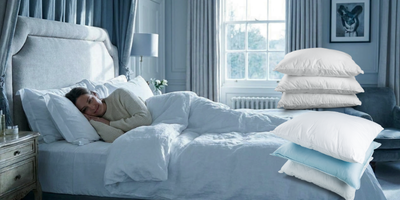
A flawless bed deserves to be paired with exceptional room staging. Complement your premium textiles with curated luxury essentials that complete the boutique signature experience.

Deciding Your Textile Persona: Percale, Sateen, or Tech Blends?
Your choice of weave dictates both your room's sensory experience and your operational overhead. Boutique properties across the USA generally anchor their bedding programs into one of three distinct categories.
Need Reliable Wholesale Supplies for Your Facility?
Hotels, healthcare facilities, restaurants, and commercial operations across USA trust Linen Plus for consistent bulk supply and commercial-grade quality.

Bulk Wholesale Pricing
Competitive pricing for large-volume procurement.

Reliable Nationwide Supply
Consistent inventory and fast shipping across USA.

Hospitality & Healthcare Grade
Products designed for demanding commercial environments.
1. Classic Cotton Percale: The Crisp, Cool Modernist
Percale uses a balanced 1-over-1 plain weave pattern. It creates thousands of microscopic air channels, making it the most breathable fabric available.
- The Tactile Experience: Crisp, cool, cool-to-the-touch, and closely resembling a freshly ironed button-down shirt. It produces a satisfying, quiet whisper when a guest slides into bed.
- Operational Advantages: It is exceptionally durable, releases stains easily, dries quickly, and actually softens with every consecutive wash.
- Best For: Modern urban boutiques, warm-climate resorts, and properties catering to hot sleepers.
2. Premium Cotton Sateen: The Opulent Indulgence
Sateen relies on a 4-over-1 satin weave pattern, exposing more thread surface to the touch.
- The Tactile Experience: Silky-smooth, heavy, with a subtle lustrous sheen and an elegant drape that feels inherently luxurious.
- Operational Advantages: Naturally resists wrinkles better than percale straight out of the ironer. However, the long "floating" yarns can catch and snag more easily if laundered alongside abrasive materials.
- Best For: Historic luxury properties, high-end metropolitan suites, and colder climates where a cozy, enveloping bed is desired.
3. Advanced Eco-Blends: The Smart Sustainability Play
Moving deeper into 2026, progressive boutique properties are adopting plant-based composite materials and organic long-staple cotton blended with high-strength micro-materials. Technologies like organic bamboo-derived fibers and performance twill weave constructions are fundamentally reshaping wholesale procurement.
- The Tactile Experience: Extremely soft, moisture-wicking, and lightweight.
- Operational Advantages: Blended weaves can reduce drying times by up to 30%, drastically lowering a property's carbon footprint and utility overhead while easily withstanding 200+ commercial washings.
- Best For: Eco-certified boutique hotels, wellness retreats, and high-occupancy properties focused on lean utility metrics.
The Perfect Morning Routine
The guest experience spans from waking up in premium linens to enjoying their first cup of high-quality coffee right in their room.
Operational Comparison: Selecting the Right Sheet Matrix
When evaluating vendors, look at the specifications through a dual-lens framework: Guest Delight and Operational Cost.
| Metric | Premium 100% Cotton Percale | Luxury Cotton Sateen | Performance Eco-Blends |
|---|---|---|---|
| Thread Count Range | T-250 to T-300 | T-300 to T-400 | T-200 to T-250 |
| Weight (GSM) | 100–120 GSM | 115–135 GSM | 95–110 GSM |
| Launability Life Cycle | 200+ Cycles | 150–180 Cycles | 250+ Cycles |
| Drying Time Factor | Standard Baseline | +15% Longer | -20% to -30% Shorter |
| Primary Aesthetic | Matte, Crisp, Tailored | Lustrous, Draped, Rich | Silk-Matte, Smooth, Clean |
The Strategic Sourcing Checklist for Procurement Managers
Before signing your next bulk contract, ensure your sheets meet these essential commercial checkpoints:
1. Single-Ply Long-Staple Fibers Only
Never accept multi-ply yarns. Multi-ply means weak, short fibers are twisted together to inflate thread count. These split quickly under commercial laundering, creating heavy pilling. Insist on certified long-staple or extra-long-staple (ELS) cotton or high-density polymers.
2. Commercial Calendering Finishes
The initial smoothness of a commercial sheet shouldn't come from chemical coatings that wash away. Ensure your vendor utilizes a mechanical calendering process—passing the fabric through heavy, heated high-pressure rollers during manufacturing to compress the fibers and lock in a permanent, crisp sheen.
3. Standardize on Optical White
While a touch of colored embroidery on a pillowcase can elevate a room's branding, your core sheet sets should remain true optical white. White sheets allow your housekeeping staff to instantaneously detect hairs, stains, or debris before a guest checks in. More importantly, it permits the high-temperature sanitization cycles required to keep properties compliant and guest confidence high.
4. Separate Your Textiles
To protect your bedding investment, explicitly mandate in your SOPs that flat-woven sheets must never be washed in the same machine cylinders as terrycloth towels. Towels are highly abrasive "lint givers" that act like sandpaper on smooth sheets, rapidly causing premature pilling and degradation.
Procurement Pro-Tip: Protect your primary mattress assets simultaneously. Always pair your sheet program with a secure, six-sided mattress encasement to provide a physical barrier against spills and allergens, using a breathable mattress pad on top for comfort layer customization.
Hyper-Hygienic Extended Solutions
Boutique hotels focusing on wellness or long-stay accommodations frequently look to healthcare-grade textile configurations to guarantee an uncompromising standard of absolute clinical cleanliness.
The Sourcing Solution
Elena Vance didn't redesign her bedding program overnight. She partnered with a commercial supplier that understood that a boutique hotel's linen is an investment in brand identity. By switching her properties to single-ply, T-300 long-staple cotton sheets, she successfully dropped her laundry replacement costs by 18% while simultaneously boosting her properties' guest room cleanliness scores.
When your property is ready to deliver an uncompromised sleep experience that honors your operational bottom line, explore the specialized wholesale commercial catalogs engineered specifically for modern American hospitality at Linen Plus. From crisp percales to high-performance textiles, source the exact foundation your boutique story deserves.
Custom Bedding Procurement Specification Sheet
Property Profile: 50-Room Independent Boutique Hotel
Target Positioning: Luxury / Curated Residential Feel
Operational Framework: High-Turnover, Commercial OPL (On-Premise Laundry) or Commercial Outsourced Laundry Service
Section 1: Core Textile Technical Specifications
To ensure the ideal balance between a premium guest hand-feel and maximum operational durability, all bedding shipments must comply strictly with the following structural parameters:
| Component | Specification Parameter | Compliance Standard |
|---|---|---|
| Fiber Composition | 100% Combed Long-Staple Cotton | Open-end yarns or short-staple cotton fibers are strictly rejected. Yarns must consist of ring-spun long-staple fibers to prevent fraying and pilling. |
| Yarn Construction | Single-Ply Only | Multi-ply construction utilized to artificially inflate thread count is a ground for shipment rejection. |
| Thread Count | T-300 | Balanced thread density (e.g., 150 warp threads by 150 weft threads per square inch). |
| Weave Type | Classic Percale (1-over-1 plain weave) | Must provide a matte, crisp, breathability-optimized surface structure. |
| Fabric Weight | 115 GSM to 120 GSM | Optimizes tactile weight for the guest while minimizing total drying cycle duration and commercial water absorption. |
| Color Specification | Optical White (No undertones) | Bleach-stable white to enable high-temperature sanitization. |
| Finish Treatment | Mechanical Calendering | Fabric must be finished via heated high-pressure rollers to lock down loose surface fibers. No temporary chemical softening coatings allowed. |
Section 2: Fabrication & Sizing Matrix
Dimensions must account for standard high-profile hospitality mattresses (up to 14-inch depth) plus a 10% commercial shrinkage allowance after initial laundering cycles.
- Fitted Sheets (King/Queen): Deep-pocket construction with deep 16-inch boxes. Heavy-duty, continuous elastic must be double-stitched securely along the entire perimeter (not just the corners) to prevent shifting.
- Flat Sheets: Oversized dimensions to accommodate secure hospital-corner tucking techniques.
- King Flat: 115" x 115"
- Queen Flat: 94" x 115"
- Pillowcases: Internal French envelope closures (minimum 6-inch flap) to completely hide the pillow form inserts and prevent gaping.
- Hem Construction: Clean, high-density stitching at 12–14 stitches per inch (SPI). All primary edges must be double-folded and lock-stitched to mitigate fraying under automated ironer stress.
- Size Identification: Integrated, color-coded stitching or labels along the bottom hem line to allow laundry personnel to immediately distinguish King, Queen, and Twin sizes during sorting.
Section 3: Commercial Laundry & Care Guidelines
To maximize the lifespan of your textile assets (target lifespan: minimum 200 wash cycles) and protect your property's capital investment, the laundry facility must rigidly adhere to these operational SOPs:
[Sorting Phase] ──> [Wash Cycle] ──> [Extraction] ──> [Finishing & Ironing]
  (Sheet-Only)      (Max 150°F /       (High-Speed)       (Feed at 15-20%
                     No Bleach Mix)                        Residual Moisture)
1. Sorting & Machine Loading
Strict Separation: Flat-woven sheets must be sorted and washed completely separate from terrycloth towels and bath mats. Washing sheets with towels introduces severe abrasion, generating premature surface pilling and fabric thinning.
Capacity Limit: Load commercial washers to exactly 80% of their rated capacity. Overloading prevents proper chemical dispersion and stain removal, while underloading causes excessive mechanical slap that breaks down fibers.
2. Chemical & Temperature Programming
Wash Temperature: Program the main wash wheel cycle at a maximum temperature of 140°F to 150°F (60°C to 65°C). This is hot enough to thoroughly melt body oils and disinfect fabrics without breaking down long-staple cotton structures.
Detergent pH Balance: Use a mild, premium commercial detergent. Ensure the final rinse cycle includes an effective souring agent to neutralize residual alkalinity, bringing the final fabric pH down to a skin-neutral 5.5 to 6.5.
Bleaching Protocol:** Use oxygen-based bleaches for standard whitening cycles. If chlorine bleach is necessary for stubborn stain removal, do not let it exceed a mild 100 ppm concentration, and ensure it is fully neutralized in the subsequent rinse phase to prevent chemical yellowing and fiber rotting.
3. Drying & Flatwork Ironing
Residual Moisture Control: Pull sheets from commercial dryers while they still retain approximately 15% to 20% residual moisture. Never bone-dry 100% cotton linens in a tumbler dryer; over-drying bakes the cotton fibers, leading to brittleness and severe wrinkling.
Ironing Phase: Feed the damp sheets directly through a flatwork ironer/calendar system set to 325°F to 350°F. This completely straightens the fibers, provides that signature crisp boutique hotel finish, and sanitizes the bedding concurrently.
Rest Periods (The 3-Par System): Maintain a strict 3-Par inventory system (1 Par in the guest room, 1 Par in the laundry, 1 Par in the linen closet resting). Allow freshly laundered and ironed linens to rest on open shelves for 24 hours prior to putting them back into service. This rest period lets the cotton fibers reabsorb natural atmospheric humidity and stabilize, nearly doubling the textile's overall operational lifespan.
Section 4: Secondary Protective Asset Specifications
To insulate and protect your core mattress and pillow investments from moisture, staining, and wear, deploy the following secondary protective line:
Mattress Protection: Every room must be outfitted with a high-performance, six-sided mattress encasement. It must feature a certified bite-proof, waterproof zippered lock mechanism to fully seal the mattress core, paired with a quilted breathable top pad to ensure guest comfort.
Pillow Protection: Utilize heavy-duty, zippered cotton-terry pillow protectors underneath your outer pillowcases. These serve as a primary sacrificial barrier against sweat, oils, and makeup, preserving the loft and sanitation of your down or down-alternative pillow inserts.
Section 5: Procurement Audit & Receiving Protocols
- First-Article Inspection: Prior to full delivery of the 50-room order, the vendor must submit a single production-line sample of a sheet set for on-site washing trials. The sample will be subjected to 5 consecutive industrial wash cycles to measure shrinkage and confirm compliance with the T-300 single-ply specification.
- Packaging Integrity: Bulk deliveries must arrive in clean, heavy-gauge polyethylene wrapping on pallets to prevent dirt ingress or water damage during shipping and staging.
- Defect Allowance: Shipments must adhere to an Acceptable Quality Level (AQL) of 1.5 or lower for structural defects (such as skipped stitches, oil marks, or uneven hems).


