


200 Wash Cycles: Your 3-Year Hotel Linen Budget Math
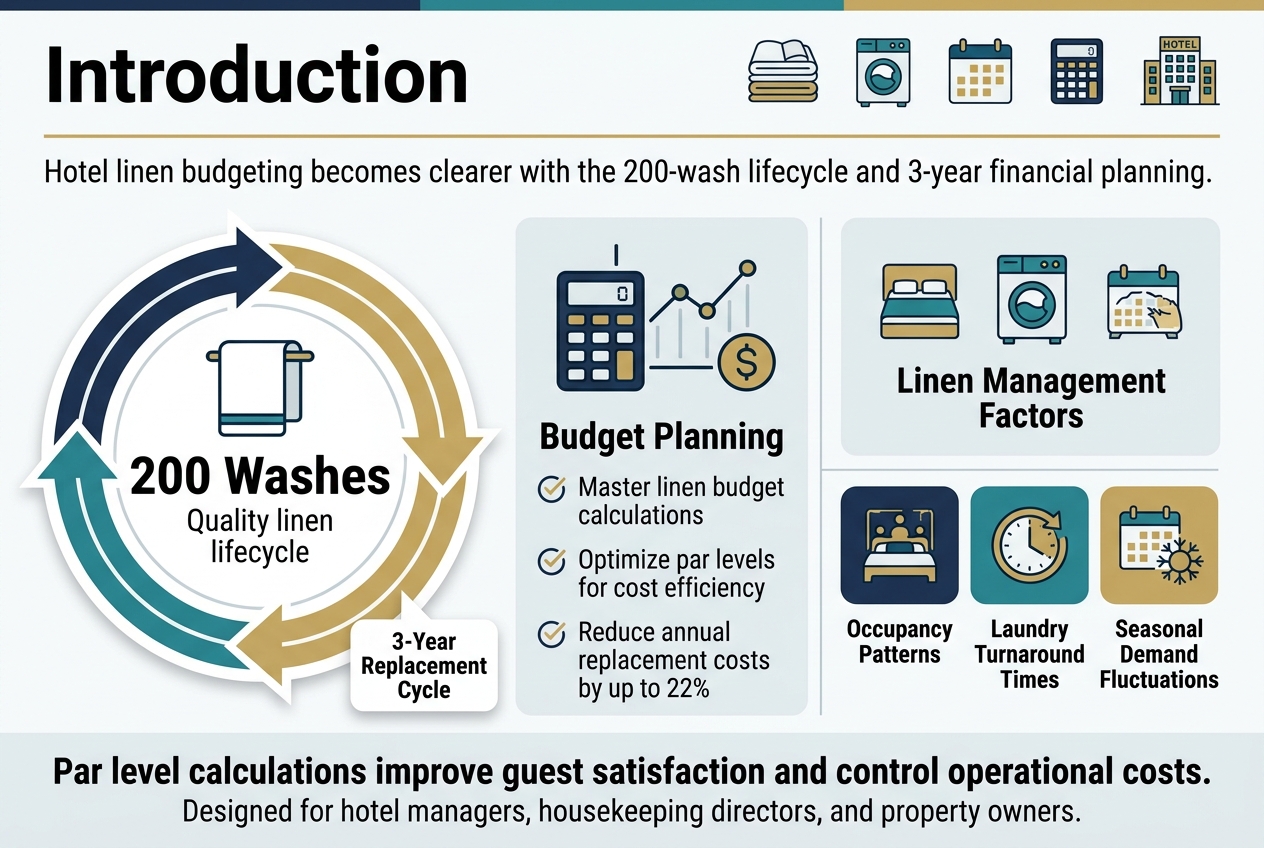
Hotel linen budgeting becomes clearer once operators understand the 200-wash lifecycle of quality linens and how it impacts their 3-year financial planning. Hotel managers, housekeeping directors, and property owners often struggle with balancing linen quality against operational costs while maintaining consistent guest satisfaction standards.
This comprehensive guide is designed for hospitality professionals who need to master hotel linen budget calculations and optimize their linen par levels for maximum cost efficiency. They'll discover how the industry-standard 3-year replacement cycle directly correlates with wash count limits and inventory management strategies.
The following sections will examine hotel linen lifecycle management from a financial perspective, showing how proper linen par level calculations can reduce annual replacement costs by up to 22%. Readers will also learn critical factors that affect par level requirements, including occupancy patterns, laundry turnaround times, and seasonal demand fluctuations that impact their hotel linen budget planning.
Understanding Hotel Linen Par Levels for Budget Control
What Par Levels Mean for Hotel Operations
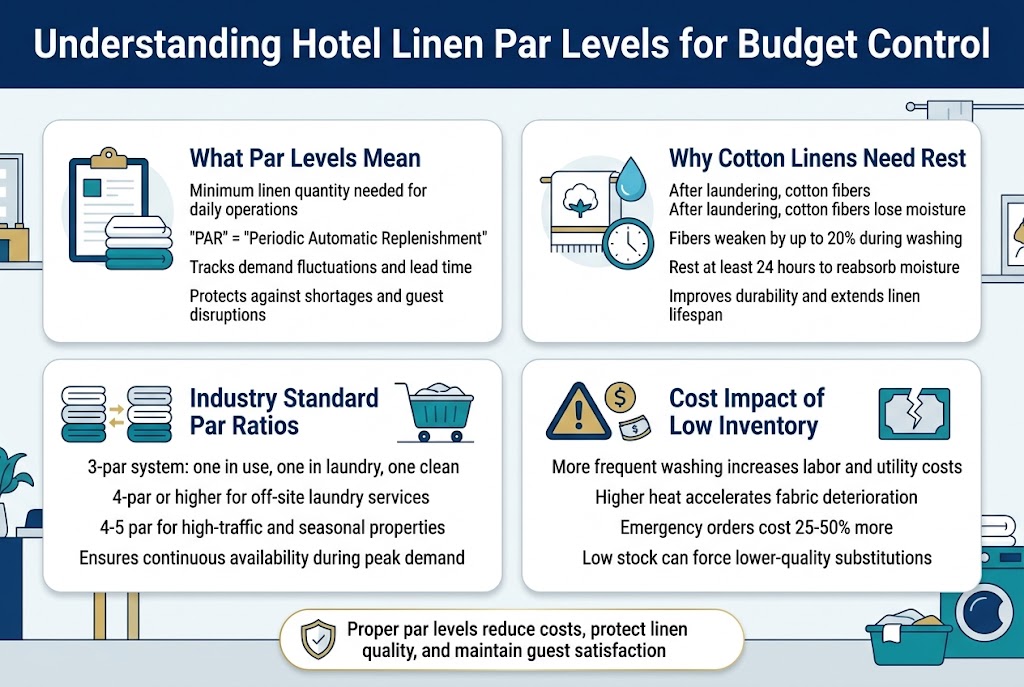
Hotel linen par levels represent the minimum quantity of linens properties must maintain to meet daily operational needs without shortages. The term "PAR" stands for "Periodic Automatic Replenishment," calculating exactly how much inventory hotels need between deliveries while accounting for demand fluctuations and lead time considerations.
This inventory management system serves as hotels' safety net, ensuring they can handle everything from unexpected occupancy spikes to laundry equipment maintenance without compromising guest experience. Proper par levels protect investments in quality linens while maintaining operational efficiency guests expect.
Why Cotton Linens Need Rest Between 200-Wash Cycles
Quality cotton linens require recovery time between uses to maintain their durability and performance throughout their lifecycle. Cotton fibers naturally contain about 8% water content, which provides strength and softness, but commercial laundering removes this moisture, temporarily weakening fibers by up to 20%.
Allowing linens to rest for at least 24 hours after laundering lets cotton reabsorb atmospheric moisture, restoring natural strength and feel. This recovery period significantly extends product lifespan, maximizing return on investment in premium textiles while preventing premature replacement costs.
Industry Standard Par Ratios (3-5 Par Systems)
Most hotels maintain a 3-par system for linens that change with every guest stay, meaning three complete sets for each room: one set in active use, one being laundered, and one clean set ready for deployment. This rotation ensures continuous availability while allowing proper recovery time.
Properties with off-site laundry services typically require 4-par or higher levels to account for transportation time and potential delivery delays. High-traffic and seasonal properties often need 4-5 par levels during peak periods due to increased occupancy rates and longer guest stays.
Cost Impact of Inadequate Inventory Management
Insufficient par levels create cascading operational problems that damage guest satisfaction and increase costs. Low inventory levels force more frequent washing cycles with smaller loads, increasing labor costs and utility expenses while requiring higher heat settings that accelerate fabric deterioration.
Inadequate inventory also leads to emergency orders at premium prices, typically costing 25-50% more than planned purchases. Properties may accept lower-quality alternatives when preferred products aren't immediately available, compromising their investment in quality American-made linens and guest experience standards.
Calculate Your Hotel's Optimal Linen Par Requirements
Essential Formula for Daily Usage Assessment
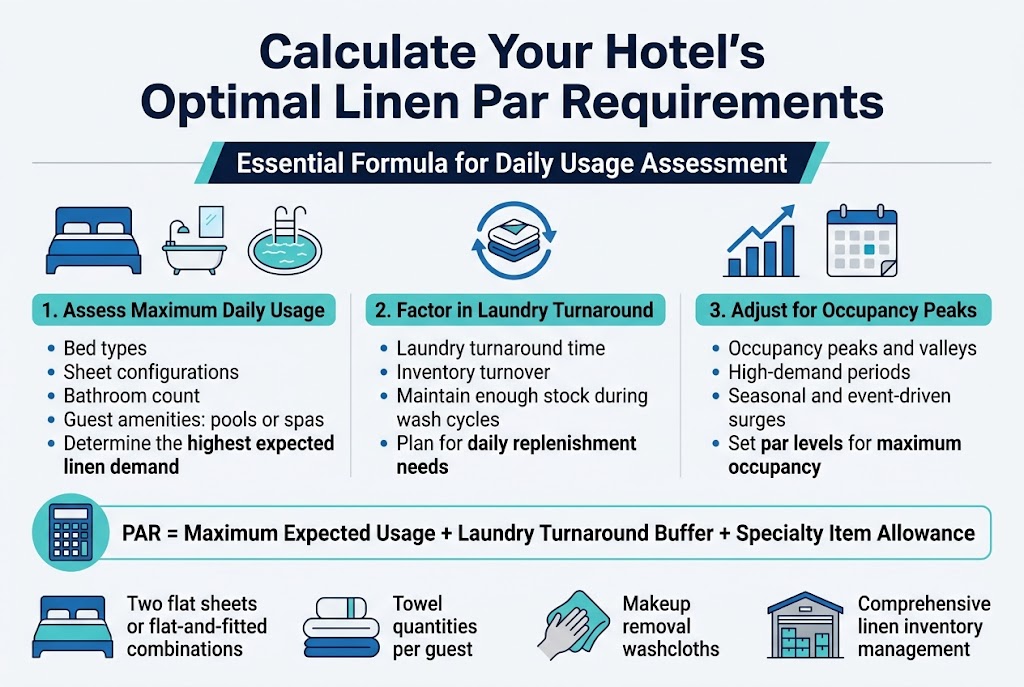
Hotel managers must establish their linen par levels using a systematic approach to determine precise inventory needs. The PAR (Periodic Automatic Replenishment) calculation requires assessing maximum expected usage based on property-specific factors including bed types, sheet configurations, bathroom count, and guest amenities like pools or spas.
Need Reliable Wholesale Supplies for Your Facility?
Hotels, healthcare facilities, restaurants, and commercial operations across USA trust Linen Plus for consistent bulk supply and commercial-grade quality.

Bulk Wholesale Pricing
Competitive pricing for large-volume procurement.

Reliable Nationwide Supply
Consistent inventory and fast shipping across USA.

Hospitality & Healthcare Grade
Products designed for demanding commercial environments.
Factor in Laundry Turnaround Times
Properties should calculate their hotel linen budget by incorporating operational variables that affect inventory turnover. They need to account for occupancy peaks and valleys when determining linen par levels, ensuring adequate stock during high-demand periods. The calculation must consider whether facilities use two flat sheets or flat-and-fitted combinations, towel quantities per guest, and specialized items like makeup removal washcloths for comprehensive linen inventory management planning.
Critical Factors That Increase Your Par Level Needs
On-Site vs Off-Site Laundry Processing Times
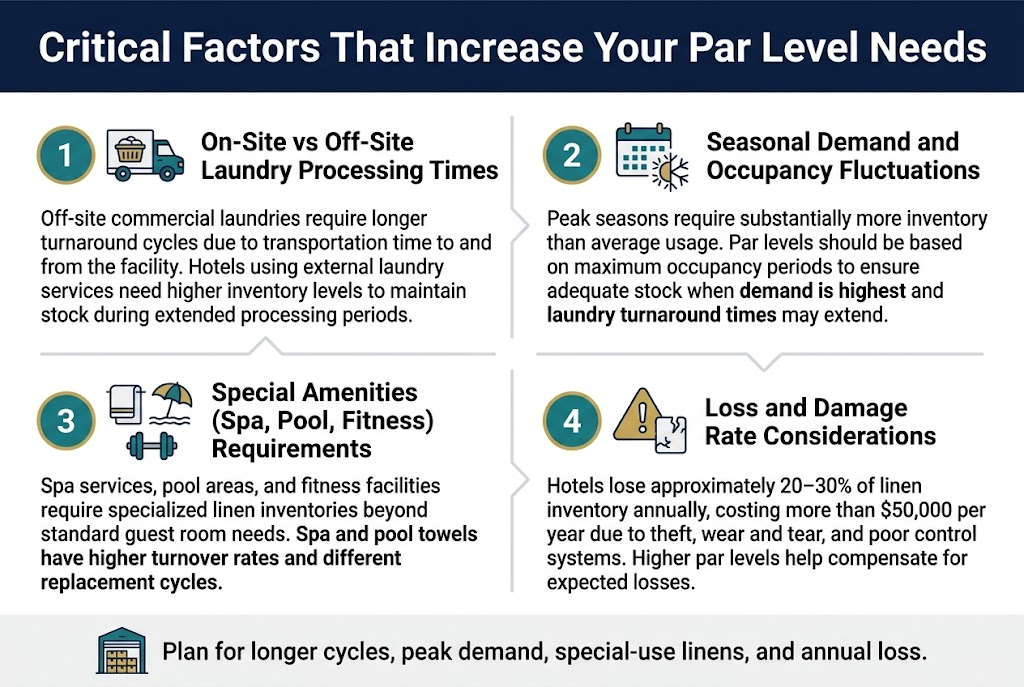
Processing times significantly impact hotel linen par levels, with off-site commercial laundries typically requiring longer turnaround cycles than on-premise facilities. Hotels using external laundry services must account for transportation time to and from the facility, which extends the overall cycle and necessitates higher inventory levels to maintain adequate stock during extended processing periods.
Seasonal Demand and Occupancy Fluctuations
Hotels experience varying linen demands throughout the year, with peak seasons requiring substantially more inventory to accommodate higher occupancy rates. Properties must calculate par levels based on maximum occupancy periods rather than average usage, ensuring adequate stock availability during busy seasons when laundry turnaround times may extend and guest demand reaches its highest levels.
Special Amenities (Spa, Pool, Fitness) Requirements
Properties offering spa services, pool areas, and fitness facilities require specialized linen inventories beyond standard guest room needs. These amenities generate additional towel and robe usage that must be factored into overall par level calculations, as spa and pool towels typically have higher turnover rates and different replacement cycles compared to standard room linens.
Loss and Damage Rate Considerations
Hotels lose approximately 20-30% of their linen inventory annually, costing more than $50,000 per year due to theft, wear and tear, and poor control systems during transportation. This significant loss rate directly impacts par level requirements, forcing properties to maintain higher inventory levels to compensate for expected losses and ensure continuous availability of quality linens for guest rooms.
Managing Linen Lifecycle for 3-Year Budget Planning
Calculate Monthly Replacement Rates
Hotel managers must track linen replacement patterns to maintain accurate budget projections over three-year cycles. Based on industry standards, most hotel linens require replacement every six months to one year depending on their quality and usage intensity. Properties should calculate their monthly discard rates by monitoring wash cycles, as linens typically withstand approximately 200 wash cycles before requiring replacement. This data enables managers to forecast when specific linen categories will need replenishment and budget accordingly for systematic replacement rather than emergency purchases.
Track Discard Percentages by Linen Type
Different linen categories experience varying replacement cycles that directly impact budget planning. Bed linens including sheets, pillowcases, and duvet covers typically require more frequent replacement due to constant guest contact and intensive laundering. Bath linens like towels and bath mats face additional wear from chlorine exposure and frequent washing cycles. Hotels should maintain separate tracking systems for each category, monitoring shrinkage percentages that occur due to laundry errors, guest removals, or internal mismanagement, as even small percentages accumulate significantly over annual operations.
Quality Investment ROI Analysis
Strategic procurement decisions should account for the total lifecycle cost of linens rather than initial purchase prices alone. Higher quality linens may cost 10% more upfront but deliver longer operational lifespans, reducing replacement frequency and overall budget impact. Hotels can maximize their investment through structured downgrade systems, transitioning linens from Grade A guest rooms to Grade B staff accommodations, then to Grade C cleaning rags, extending total utility across multiple years and reducing procurement needs.
Emergency Stock and Buffer Management
Effective three-year budget planning requires maintaining appropriate buffer inventory to prevent costly emergency purchases. Hotels operating with proper PAR levels typically maintain one set in use, one in laundry, and one in storage, with luxury properties often requiring four PAR levels for operational stability. Emergency stockouts disrupt room turnover efficiency and force properties to purchase replacement linens at inflated prices, making buffer management essential for protecting annual budget allocations and maintaining consistent operational standards.
How OTA Platforms Are Scoring Your Sustainable Hotel Items
OTA sustainability scoring is no longer passive. Booking.com's Sustainability program, launched in its current form in 2022 and expanded in 2023–2024, ranks properties using a disclosed framework that includes soft goods sourcing as a scored category. The scoring criteria specifically look for:
- Use of certified eco-friendly linen, towels, and amenities
- Supplier documentation confirming certification chain (GOTS, Oeko-Tex, GRS)
- Linen reuse programs with guest opt-in (this is separate from sourcing but compound-scored)
- Evidence of low-chemical or fragrance-free laundry processing (relevant for sensitive-skin guest niches)
Google Hotels surfaces sustainability badges sourced from Green Key, EarthCheck, and equivalent third-party certification bodies — and increasingly from OTA self-reporting data. Properties visible in Google's "sustainable" filter category in competitive US markets (San Francisco, New York, Austin, Napa) are consistently outperforming non-filtered alternatives on ADR at equivalent star ratings.
For a US boutique hotel operator, the practical takeaway is: your linen supplier's certifications are now a direct booking conversion input. Explore how the right boutique hotel linen program integrates ESG documentation into daily operations — not as a compliance overhead but as a revenue enabler.
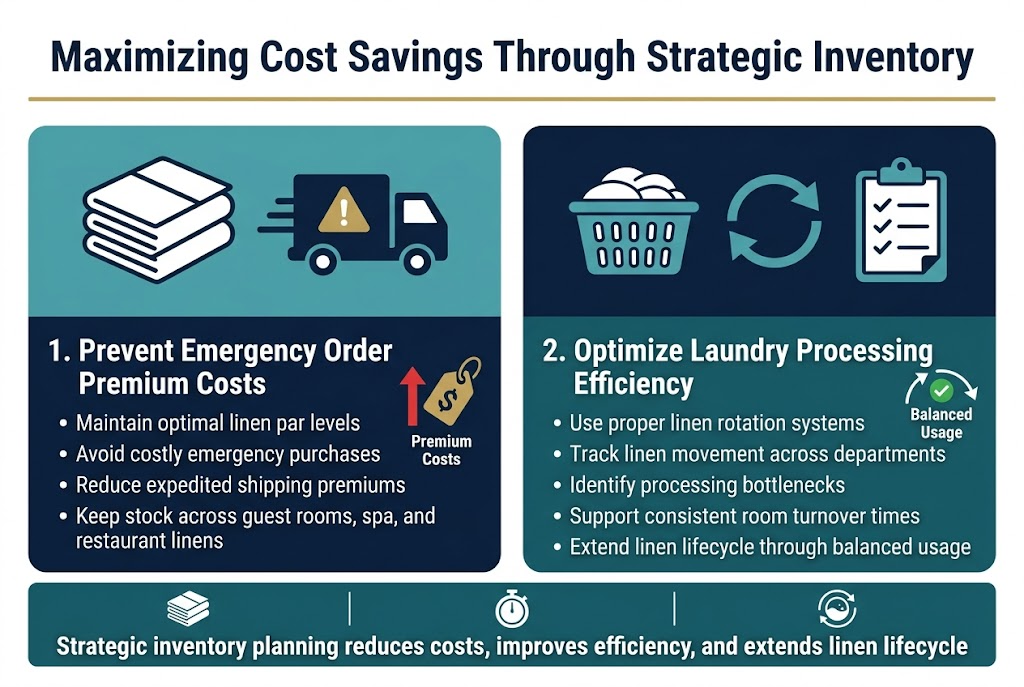
Maximizing Cost Savings Through Strategic Inventory
Prevent Emergency Order Premium Costs
Hotel managers can significantly reduce their hotel linen budget by maintaining optimal linen par levels to avoid costly emergency purchases. When hotels run short on inventory, they often must order replacement linens at premium prices with expedited shipping, which can increase costs substantially. Strategic inventory planning helps hotels maintain adequate stock levels across all departments, from guest room bedding to spa towels and restaurant table linens.
Optimize Laundry Processing Efficiency
Proper linen rotation systems ensure equal usage across all inventory, which reduces operational delays and supports housekeeping efficiency. Hotels that implement systematic tracking procedures can monitor linen movement across departments and identify areas where processing bottlenecks occur. This approach helps maintain consistent room turnover times while reducing the strain on laundry operations and extending the overall linen lifecycle through balanced usage patterns.
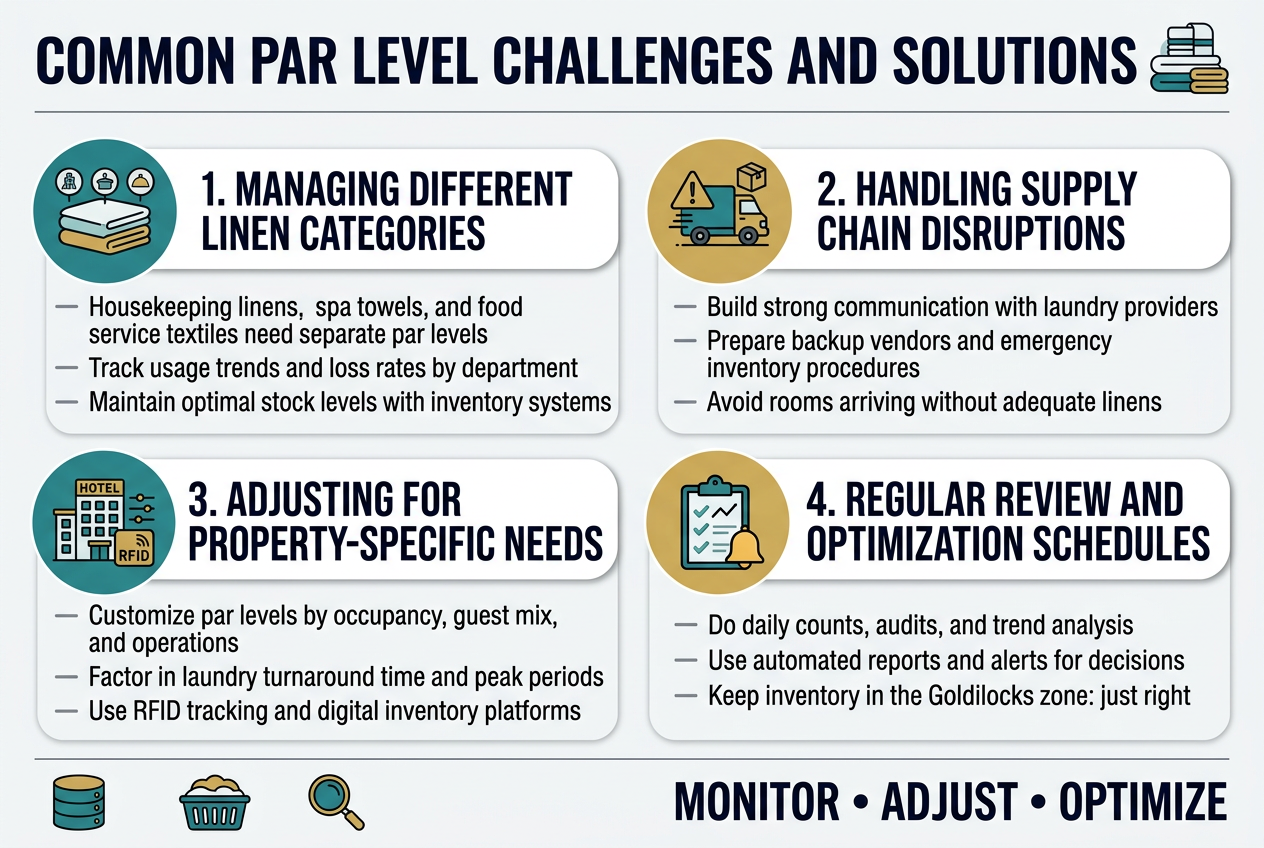
Common Par Level Challenges and Solutions
Managing Different Linen Categories
Hotels face unique challenges when managing diverse linen categories across departments. Properties typically handle housekeeping linens, spa towels, and food service textiles, each requiring different par levels and tracking protocols. Effective inventory management systems enable hotels to differentiate between departments, identify usage trends, and pinpoint areas with higher loss rates, ensuring each category maintains optimal stock levels.
Handling Supply Chain Disruptions
Supply chain disruptions can create significant operational challenges for hotel linen management. Properties must establish strong partnerships with laundry providers, whether in-house or outsourced, with clear expectations and communication channels. Hotels should develop protocols for addressing shortages or quality issues, including backup vendor relationships and emergency inventory procedures to prevent the "horror movie scenario" of guests arriving to rooms without adequate linens.
Adjusting for Property-Specific Needs
Each hotel property requires customized linen management approaches based on occupancy patterns, guest demographics, and operational structure. Properties must calculate optimal par requirements considering factors like laundry turnaround times, peak occupancy periods, and specific amenity offerings. Technology solutions like RFID tracking and digital inventory platforms allow hotels to adapt their systems to property-specific needs while maintaining consistent quality standards.
Regular Review and Optimization Schedules
Consistent monitoring through daily counts and trend analysis helps properties spot inefficiencies and address potential loss patterns before they escalate. Hotels should conduct regular audits and establish scheduled reviews of their linen inventory management processes. Automated reporting systems provide insights through usage reports and alerts, enabling data-driven decision making for purchasing decisions and par level adjustments to maintain the "Goldilocks effect" of having just the right inventory levels.
Frequently Asked Questions(FAQ)
How often should hotels replace their linens for optimal budget management?
How do hotels calculate linen replacement costs in their annual budget?
What factors increase hotel linen par level requirements
What factors increase hotel linen par level requirements?
Mastering hotel linen par levels transforms operational chaos into seamless guest experiences while protecting substantial textile investments. The industry-standard 3.5 to 4.5 par system ensures housekeeping teams maintain adequate inventory across all 200 wash cycles, preventing costly emergency shortages and extending linen lifespan by up to 22%. Properties that implement proper par calculations based on daily usage, laundry turnaround times, and safety buffers create sustainable inventory systems that support five-star service standards without overextending annual budgets.
Strategic par level management delivers measurable returns through reduced replacement costs, optimized laundry processing, and enhanced guest satisfaction. Hotels utilizing premium cotton with adequate par levels achieve lower per-use costs while maintaining consistent quality across their entire inventory rotation. Whether managing a boutique property or large resort, investing in proper par calculations and quality American-made linens ensures operational reliability during peak seasons and protects long-term profitability. The mathematics of successful hotel operations begins with understanding that proper inventory management isn't an expense—it's the foundation of sustainable hospitality excellence.
Ready to Build a Certified Sustainable Linen Program for Your Property?
Linen Plus™ supplies US boutique and independent hotels with GOTS-certified, Oeko-Tex verified hotel linen — tariff-resilient sourcing, bulk wholesale pricing, and par planning support included.
Get a Wholesale Quote →


